What if consumption could save the world?
Streamateria is, and has always been a vision. It does not tell us to get from A to B, but instead suggets a new path towards uncertainty.
The idea was first presented in FORM magazine in 2014, suggesting a new, disruptive path for an industry in free fall. What would happen if fashion abandoned the core expectations of longevity and ownership in favor of ephemeral experiences, with clothes designed to die like a leaf in the forest?
By defining quality not as something that has a long lifespan, but more as a function within a system, new ways of living becomes possible.
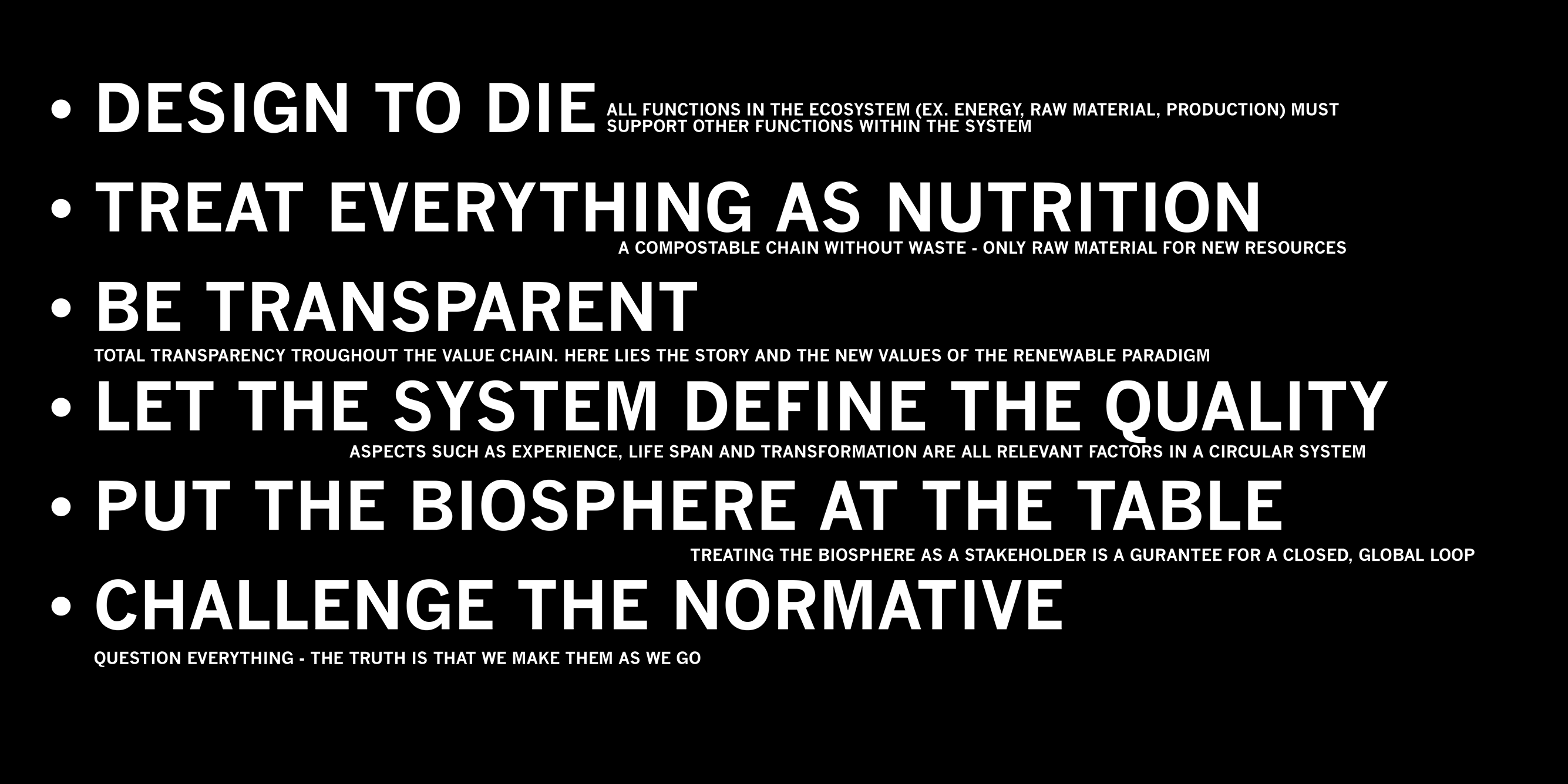
The Manifesto (2015)
Written at the early stages oof the design process, the Manifesto became the guiding principles of all the work that followed.
Quality, but for whom?
This is the critical entry point of Streamateria. Not offering a solution but challenging the first principles of consumption, ownership, individualism and modernity.
Affirmative design takes quality for granted and asks how to deliver more of it. Critical design take the opposite stance by asking what quality actually means.
We take the word for granted because it implies that value is being created. But value for whom? For the shareholder, the consumer? With an escalating climate emergency, the answer is not that simple anymore.
The Cinderella moment
There is beauty in the ephemeral. Think of the brief moment when a cherry blossom drops from the branch and falls to the ground. In Japan it is called Mono no Aware which might translate into "the passing of time, or the sadness of things". The beauty lies in the moment when you felel time passing. A windflower, like Cinderella, reminding our of our own impermanence.
Now think of a forest. It is an ecosystem built entirely on consumption, on things that grow, live, and die, made richer by the dying. Nothing in it is hoarded nor kept past its use. Nothing in the forest asks to last forever, nor can decide over its life span.
Ashes to Ashes
Fashion has succumbed to the rational calculations by engineers, economists, and compliance departments who decide what fashion is. Those calculations are necessary to perpetuate the industry, but they are not fashion.
Streamateria aim to bring meaning and life back to fashion. Clothes that are like good food. Not owned, but experienced. Windflowers in spring that remind us of our own, inescapable life trajectory.
"I do all-round training in my Streamateria tank top, everything from yoga and kettlebell to running, and I've been surprised by how durable it is despite many training sessions.
The material takes some getting used to at first, since it's thicker than a regular tank top, but it holds warmth and cools well across different types of training.
Despite its biodegradable and somewhat delicate material, I don't feel like I need to be careful during training. I train with the same intensity as I would in a traditional workout garment."
Frida, 25, slalom skier and marathon runner
From studio to street
In 2020 Streamateria became a working collection, Design to Fade, through a collaboration with PUMA at Milan Design Week.
Thermal garments for runners, tested against one of sport's most wasteful, least examined habits, the mountain of clothing dumped at the finish line of every major marathon.
New York alone sees over 55 tons of sweatshirts, pants, and sleeping bags abandoned on the course in a single race.
"I've trained in the same tank top twice. One day I did yoga in the morning (a lovely feeling, though it could use a different fit), then I wore the top all day at school under my clothes, which also gave a nice, airy feeling because of the fit.
In the evening I did high intensity interval training, running, and floor strength work, it worked well and the top held up.
I used it a second time for a whole day and then for a lighter strength session. Still holding up."
Moa, 24, freeride skier and yoga instructor
The business case
Streamateria is not only a material worth believing in. It is a business with a route to market already tested through a global brand, production economics already proven at prototype scale, and a plan to grow from a single collaboration into a genuinely scaled, circular supply chain.
We built the case the same way we built the material, by testing it against reality..
If you want the full picture, production economics, go-to-market timeline, and where we currently stand, get in touch and we'll send the deck.
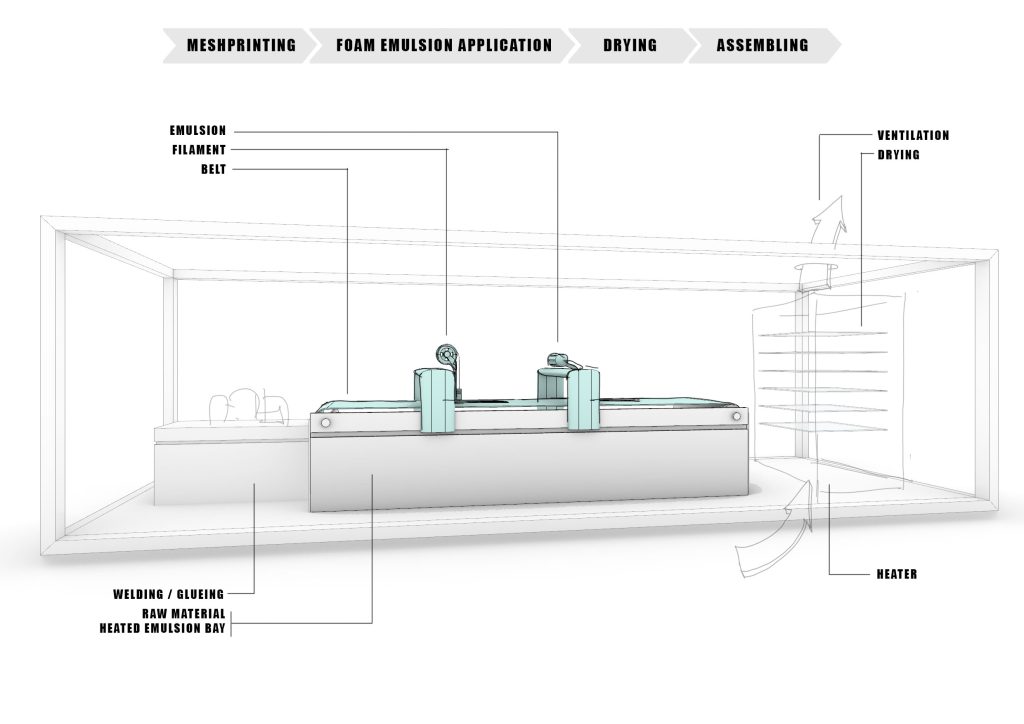
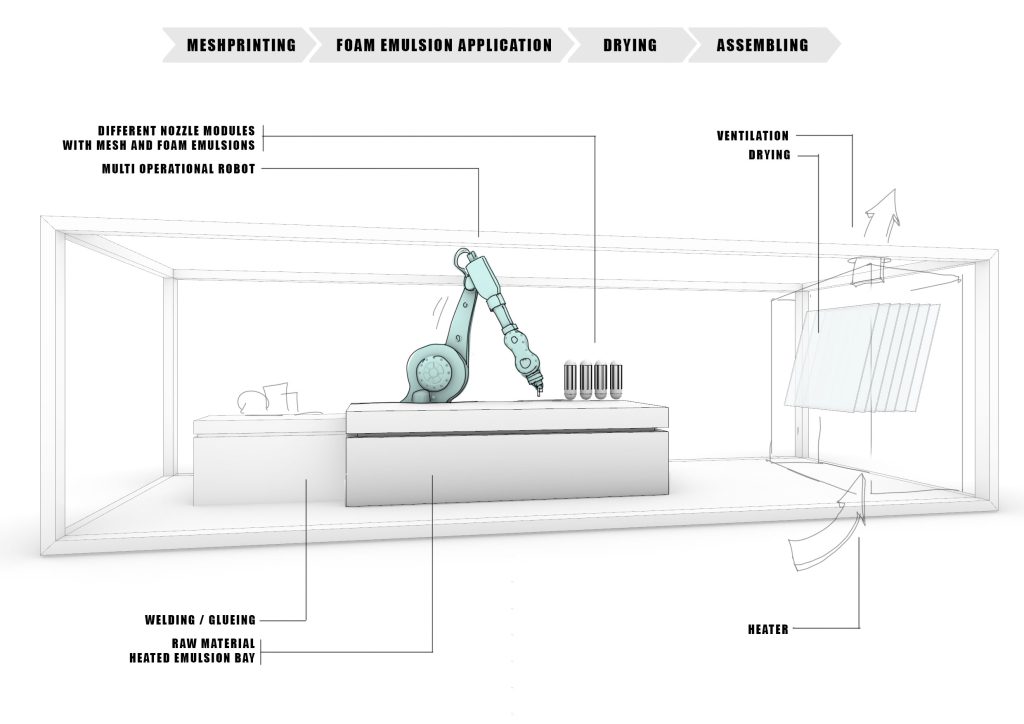
Streamateria mobile micro factory (2022)
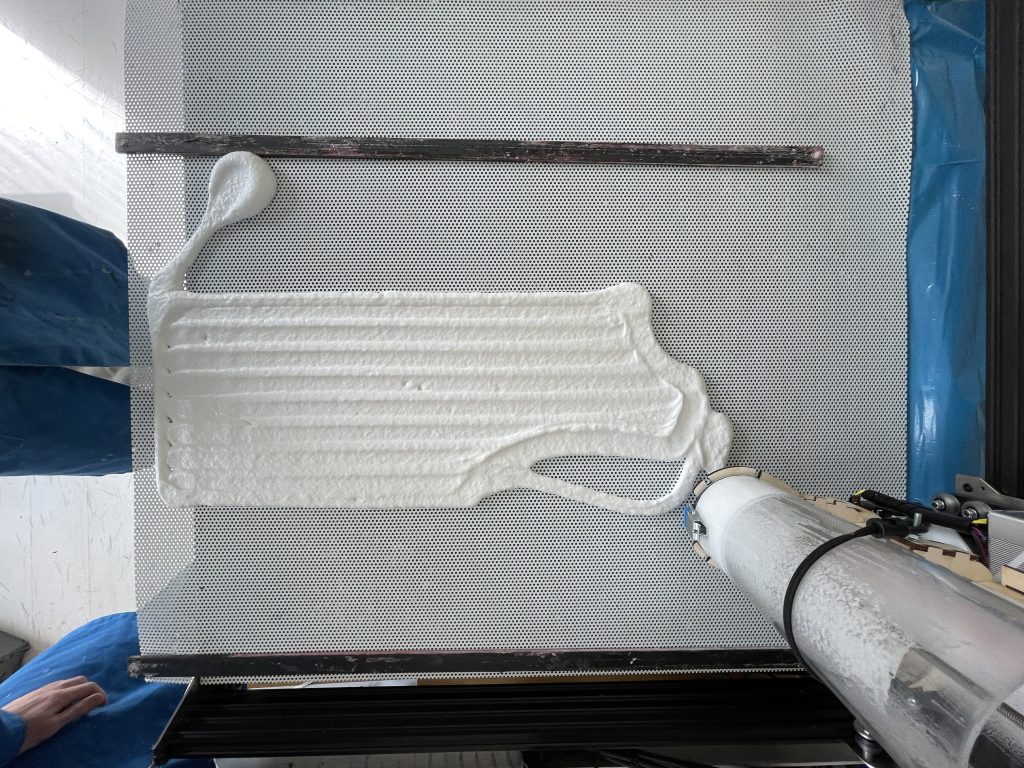
A mobil micro factory operated by industrial or portal robots 3D printing the foam into patterns ready for stitching.
Ideal for a marathon where unsustainable running tops in polyester are replaced by temporary, climate neutral tops that cool you, give you nutrition, reduce smell and are antiseptic.
Just make sure you get to the finish line in time before you are, like Cinderella, naked.
Capacity: 10 000 pcs per week